
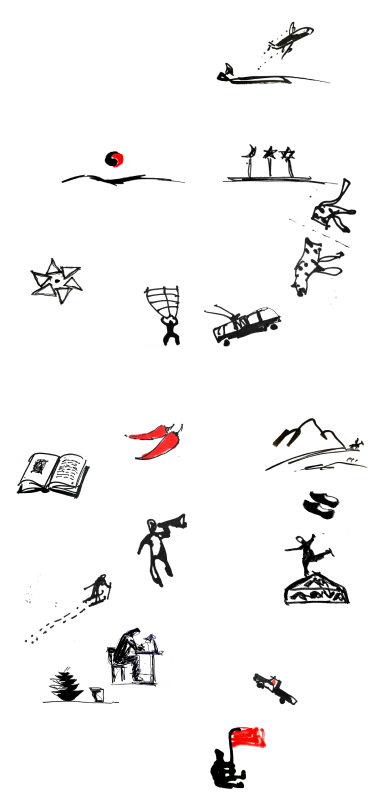
Map Icons
Journeys of perception Alter/Native realities of modern Mongolia Invasion Letter to East Turkestan Dodeskaden Women & ways Old airport: my personal homeland Maïdyñ ïisin shyğаru Tasting ethnic politics along roadsides Nomadtitude Speed bump Identifying a leader Epic failure Anthropology & Art Catalog Trail A dream in Shambala Way to Rome
Map Icons
Trail Epic failure A dream of Shambala Journeys of perception Dodeskaden Old airport: my personal homeland Alter/Native realities of modern Mongolia Tasting ethnic politics along roadsides The way to Rome Identifying a leader Nomadtitude Maïdyñ ïisin shyğаru Speed bump Letter to East Turkestan Catalog Anthropology & Art Invasion Women & ways

Way to Rome

This project started in the late 2000s as a photo-book and repository of small stories (quotes) about things that happened to us and around us – political and natural disasters. In the project it is as if the traveler follows in the footsteps of Attila, Genghis Khan or Marco Polo from the territory of China to Europe, all the way to Venice, through photos and documents.

But in fact the journey takes place inside the traveler and is a reflection in the information space. We do not have enough documentary archives covering the vast territory of the Great Steppe. If there are any such records, they are outside our land, in the archives of other countries. All that we know was transmitted to us verbally, through poetry or oral masterpieces of the great improvising poets, the akyns.

For me, it is important to study the past and find the right answers and ideas materialised in a truthful artistic form.

My photos are made with simple frames – the horizon as well as objects and installations. I rarely use random objects; in general I first prepare a sketch for a photo work, and from it I create objects and installations.

Said Atabekov
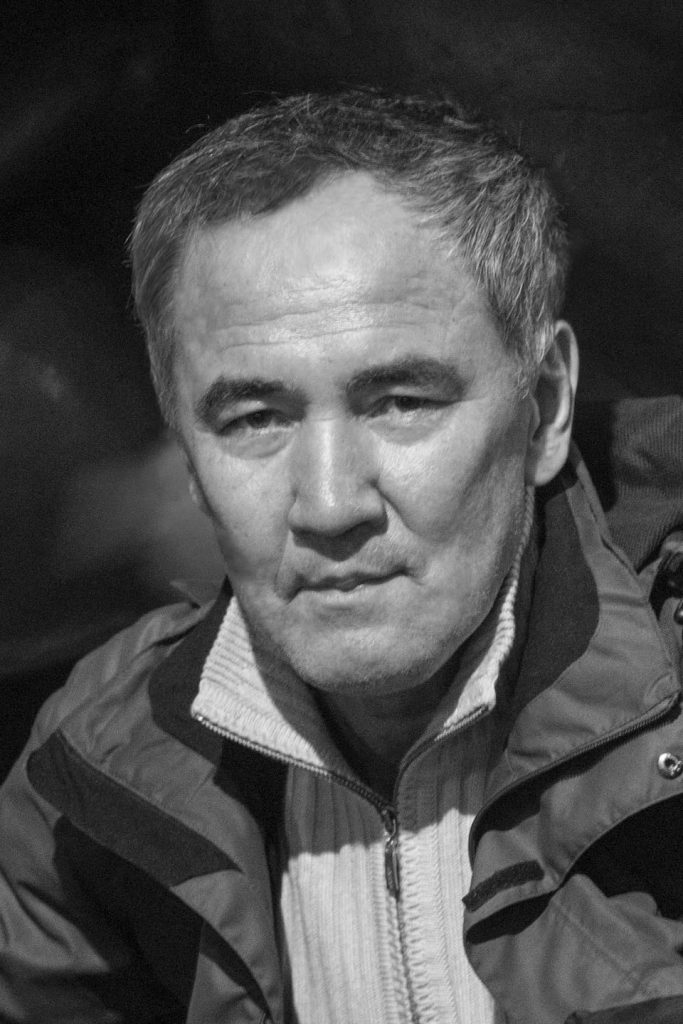
Atabekov was born in 1965 in Bes Terek in Tashkent province, Uzbekistan. After his studies at Shymkent Art College, he continued with the education of upcoming artists and the organization of exhibitions of their work.

He began his career when the introduction of perestroika in the Soviet Union afforded him greater artistic freedoms. He founded the Kyzyl Traktor (Red Tractor) collective and experimented with international modernism. In the course of its long history, his region had at different times been under the influence of four strong and often conflicting ideologies: nomadic pantheism, Islam, Russian influences and western capitalism. The deeper paradoxes of these can repeatedly be seen in his work, such as from the time of Genghis Khan, during communism and in the period following the dissolution of the Soviet Union. In 2011 Atabekov was honored with a Prince Claus Award.